
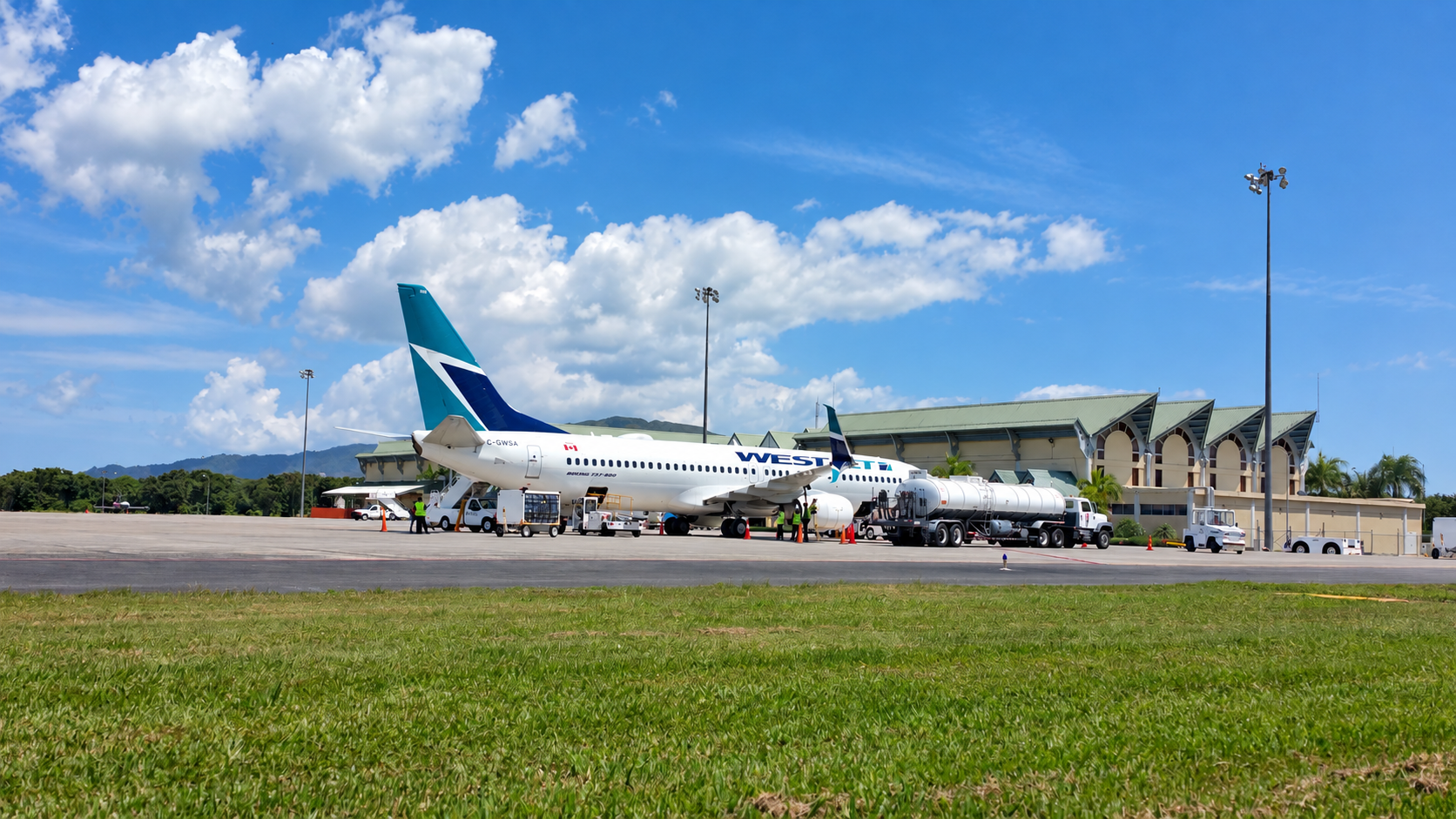
Why El Catey's future depends on demand, airline economics and the pull of two much larger airports, and why Samaná should think carefully about the kind of growth it asks for.
One of the questions we hear constantly from residents, property owners and visitors is simple:
When will we finally have more direct flights to Samaná?
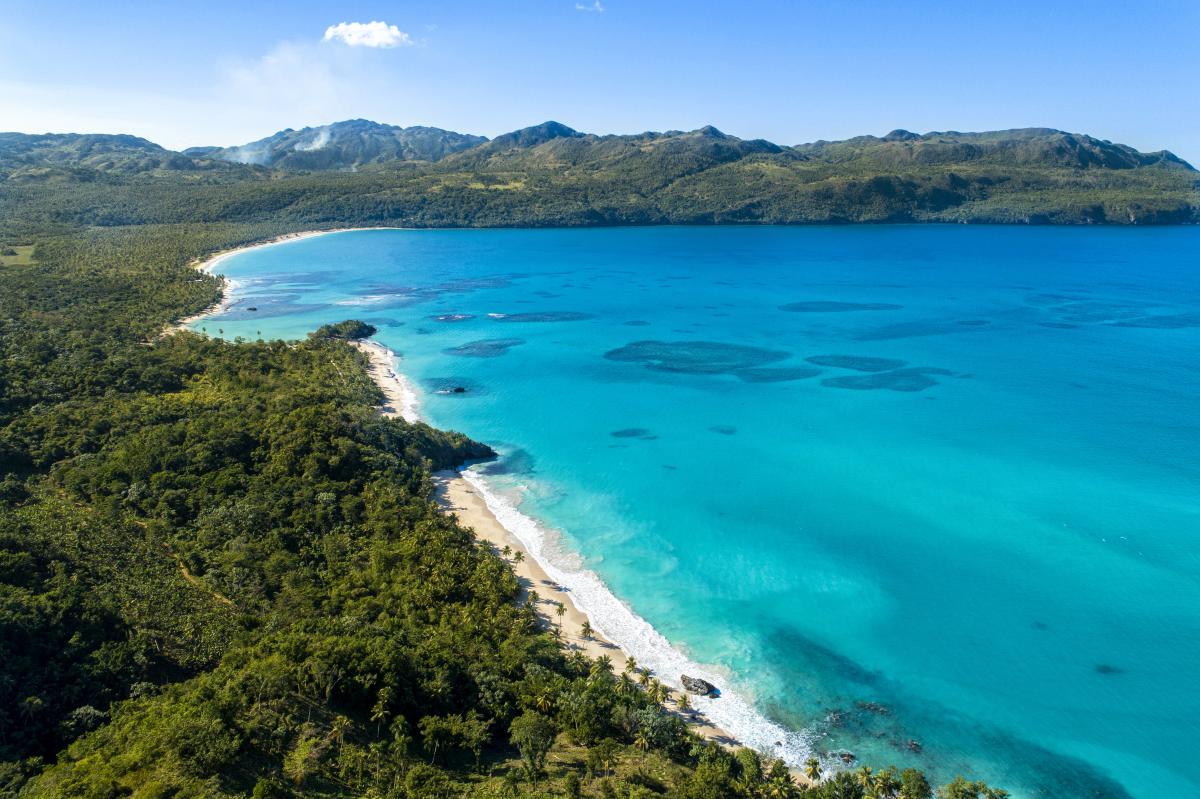
It is a fair question. Anyone who has landed in Santo Domingo or Puerto Plata and then spent hours driving to Las Terrenas, Samaná or Las Galeras naturally wonders why airlines do not simply add more flights to Samaná El Catey International Airport (AZS), officially the Presidente Juan Bosch International Airport.
The answer is not that airlines have forgotten Samaná. The answer is economics. The encouraging part is that the economics are beginning to move in Samaná's favor. There is also a second question that deserves as much attention as the first: what happens to a place like Samaná if the flights arrive faster than the planning does? We cover both below.
How airlines decide where to fly
Airlines do not open routes because people want them. They open routes because the numbers work. Network planning is an investment decision. For every aircraft an airline owns, it has dozens of possible places to deploy it, so a new route competes against every other profitable use of the same plane.
According to IATA, airlines evaluate origin-and-destination demand, fares, historical capacity, airport costs, aircraft operating costs, competition, regulation, scheduling and expected profitability. In simple terms, an airline asks:
Can we fill enough seats, at a high enough average fare, often enough throughout the year, to make this route more profitable than putting the aircraft somewhere else?
That is the question behind every potential New York–Samaná, Miami–Samaná, Madrid–Samaná or London–Samaná route. An illustrative example shows the scale. A 180-seat aircraft flying twice per week in each direction creates roughly 37,000 seat segments per year. At an 80% load factor, the route still needs around 15,000 round-trip customers annually, before anyone asks whether their fares are high enough to make it attractive. Inconvenience alone does not create an airline route. Sufficient, repeatable demand does.
Supply and demand: Samaná next to the giants
The 2022 national census counted 114,468 residents in the entire province of Samaná. The population is growing and is supplemented by a substantial expatriate, second-home and tourism market, but it is a very different catchment area from Santo Domingo.
VINCI Airports reports that Samaná Airport handled approximately 95,000 total passengers in 2025. Santo Domingo's Las Américas Airport handled approximately 5.3 million. Punta Cana, the country's main gateway, handles approximately 8 million passengers a year according to its own airport. The table below shows what an airline planner sees when comparing the northeast with the east.

Put in national terms, Samaná's roughly 95,000 passengers equal about 0.5% of the 20.3 million international passengers the Dominican Republic's airports handled in 2025. Those numbers explain a lot. An airline launching a route to Santo Domingo or Punta Cana can sell to millions of residents, business travelers, visiting friends and relatives, tourists and connecting passengers. At El Catey the market is more tourism-driven and therefore more seasonal.
The Ministry of Tourism's 2025 Samaná destination report shows the same thing. It recorded 354 arriving commercial flights, 56,577 arriving seats and 47,728 arriving passengers, an 83% load factor. Those arrival-only figures are broadly consistent with VINCI's roughly 95,000 total passengers. The same report also shows five significant direct routes. Hotel occupancy of 58.2% adds another signal: a planner sees seats that fill in winter and rooms that are far from full for the rest of the year.
This is not an infrastructure problem. El Catey has a 3,000-meter runway and can handle long-haul aircraft. It is a demand-density problem.
How Punta Cana and Santo Domingo pull traffic away from Samaná
Dominican tourism is concentrated in a few places. In 2025 the country welcomed more than 11.6 million international visitors, including about 8.8 million by air. Punta Cana alone took roughly 55.8% of international air arrivals according to the national statistics office (ONE), and between 59% and 63% of arrivals in the Ministry of Tourism's 2025 monthly reports, depending on the period. Punta Cana and Las Américas together handled 16.75 million of the 20.3 million international passengers, or 82.5%. Add Cibao in Santiago and the figure reaches almost 94%.
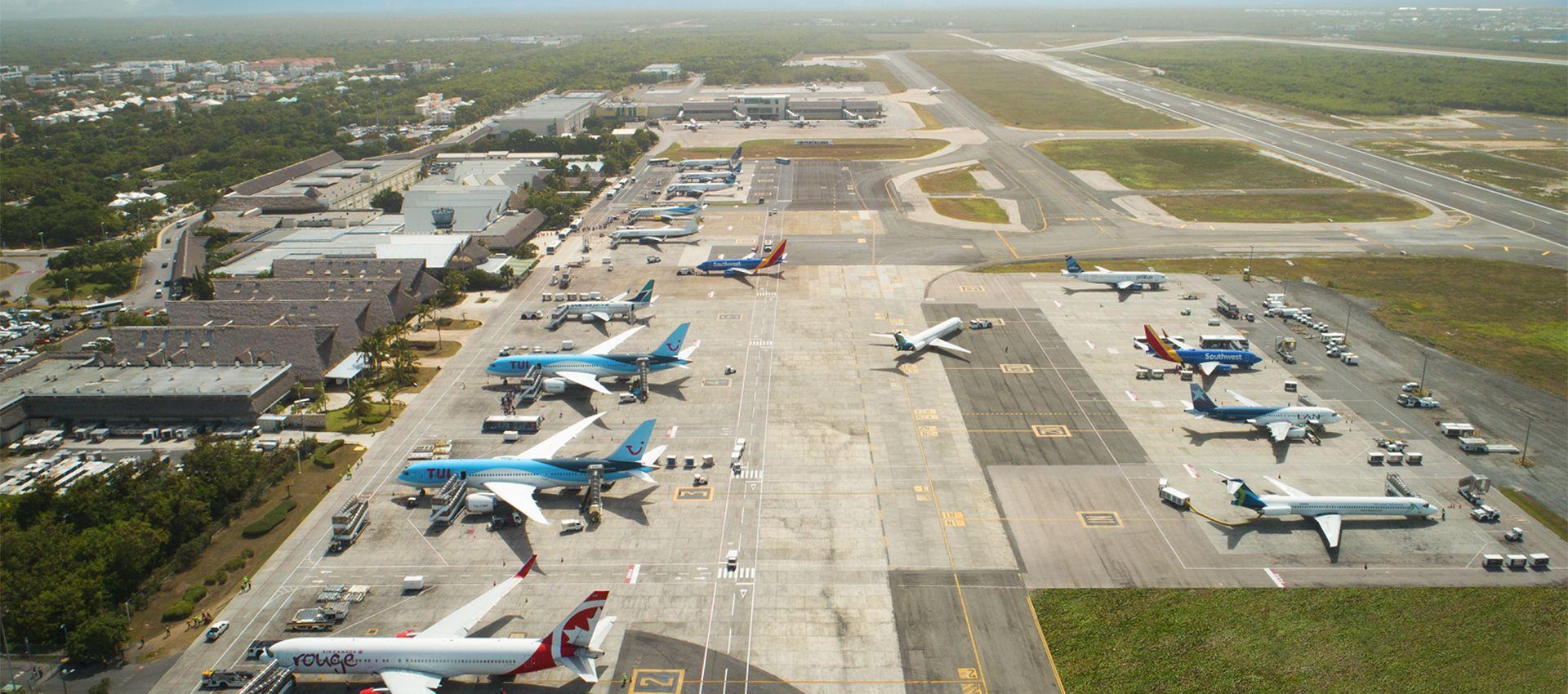
In December 2025 Punta Cana set weekly records of up to 900 flights and handled more than 1.08 million passengers in that single month, 11.5% more than a year earlier. Airlines like that kind of proof. Every added flight to Punta Cana makes the next one easier to justify, because connections, crews, ground handling and distribution are already in place. A new route to a 95,000-passenger airport has to beat that track record on the same aircraft.
Santo Domingo is becoming stronger as well. Both Samaná and Las Américas are operated by AERODOM, owned by VINCI Airports. (Punta Cana is a privately owned airport, outside VINCI's Dominican network, so Samaná competes with it directly.) In 2023 the government extended VINCI's concession for another 30 years, through 2060, and VINCI committed approximately US$830 million to Dominican airport infrastructure. The largest project is a new passenger terminal at Las Américas, an investment of more than US$250 million, scheduled for 2028, adding capacity for roughly 4 million more passengers per year.
For Samaná that creates two effects. First, a better Santo Domingo makes the case for a dedicated Samaná route harder: an airline knows that passengers can already reach the country through SDQ and continue by road. Second, VINCI has a concession to 2060 and benefits when traffic grows anywhere in its network, and AERODOM has repeatedly stated that attracting new routes to Samaná is a priority. The operator can market the destination, improve facilities and work with airlines, but the airline makes the route decision.
The trend may already be changing
The strongest reason for optimism is that we are no longer talking only about potential demand. We are starting to see actual growth.
In December 2025, Air Caraïbes launched direct Paris-Orly–Samaná service, operating up to twice weekly during the winter season.
In the first quarter of 2026, VINCI reported approximately 63,000 passengers through Samaná Airport, 64% more than in Q1 2025.
In September 2026, AERODOM reported that Canadian passenger traffic at Samaná was running 62% above 2025 levels, with Canada–Samaná seat capacity expected to rise about 39% this coming winter.
That is how air connectivity normally develops. Not through one dramatic announcement, but through a sequence: more visitors, stronger load factors, more seasonal capacity, additional frequencies, longer seasons, new origins and eventually year-round routes.
What about New York?
For Samaná, New York/New Jersey is perhaps the most obvious missing large market. The area has a large Dominican population, strong tourism demand for the Dominican Republic and a growing community of foreign homeowners and investors in Samaná. But airlines need evidence that enough of those passengers specifically want Samaná, rather than Santo Domingo, Santiago, Puerto Plata or Punta Cana.
The Ministry of Tourism's 2025 connectivity data records New York service in Q4 at two weekly frequencies, with a load factor of approximately 54%. That number should not be overinterpreted, because seasonal and special operations can distort small samples. It shows an important point, though: opening a route is only step one. Filling it profitably decides whether it stays, expands or disappears. A sustainable New York–Samaná route will probably emerge when an airline can see enough year-round traffic from several overlapping groups: tourists, Dominican residents and diaspora, second-home owners, expatriates, business travelers and property owners.
Why real estate and air connectivity are linked
According to the Ministry of Tourism, Samaná had 56 reporting hotels and 3,134 hotel rooms in 2025, with average hotel occupancy of 58.2%. Short-term rental supply averaged more than 5,000 active properties and 11,000 rooms.
Residential development creates something tourism alone often cannot: year-round passengers. A person who owns a home in Samaná may travel six, eight or twelve times per year. Friends and family visit. Businesses need employees, consultants and suppliers. Events generate travel. More permanent residents produce more predictable demand outside the winter season, and that matters enormously to an airline's spreadsheet. This is one reason we believe the long-term development of the peninsula and its air connectivity are connected. Projects that increase the number of residents, guests, homeowners and businesses help create the economic case for connectivity.
Be careful what you wish for
Now the other side of the question. People love Samaná for its nature: humpback whales that return every winter, the mangroves and caves of Los Haitises National Park, quiet beaches and a peninsula where, as one travel writer put it, you can throw a stick and hit a tree, sand or water. The Bancos de la Plata and Navidad Marine Mammal Sanctuary was created in 1986 and hosts between 1,500 and 2,000 humpbacks each season. Whale watching alone drew more than 57,000 visitors in 2017, under rules on boat distance and vessel capacity.
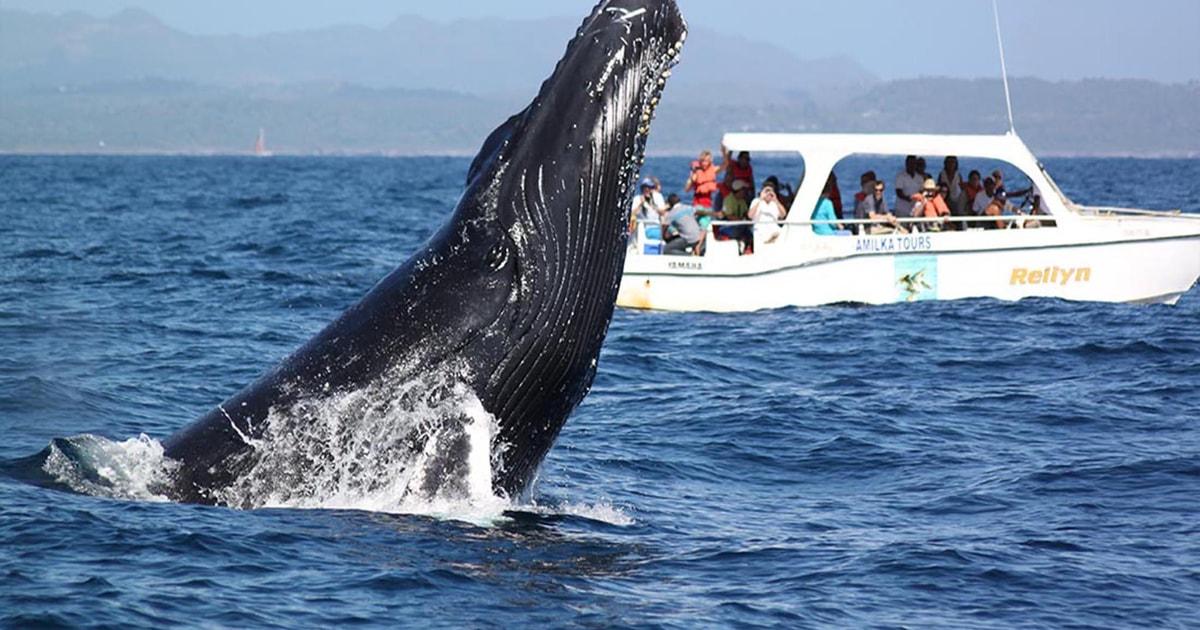
That nature is the product. More flights bring more people, and more people need rooms, roads, water, sewage treatment and land. Professor Renée Vásquez of INTEC has said, "Tourism should be an engine, but also a guardian of the territory." The experience of other destinations shows what happens when the engine runs ahead of the guardian.
Case study 1: Punta Cana, the success that outgrew its coast
Punta Cana is the clearest example in our own country. A 40-person hotel in the 1970s became a zone that added more than 21,000 rooms between 2001 and 2018, reached about 39,500 rooms by 2017 (51% of the national total) and now has over 54,000. An investigation by Latino Rebels found that the land included dunes, mangroves and wetlands that were filled or dredged for hotels, and that the area was losing meters of beach to erosion. Local business owners blamed weak enforcement of the 60-meter coastal setback. The World Bank has warned that more than 70% of Dominican beaches show signs of erosion.
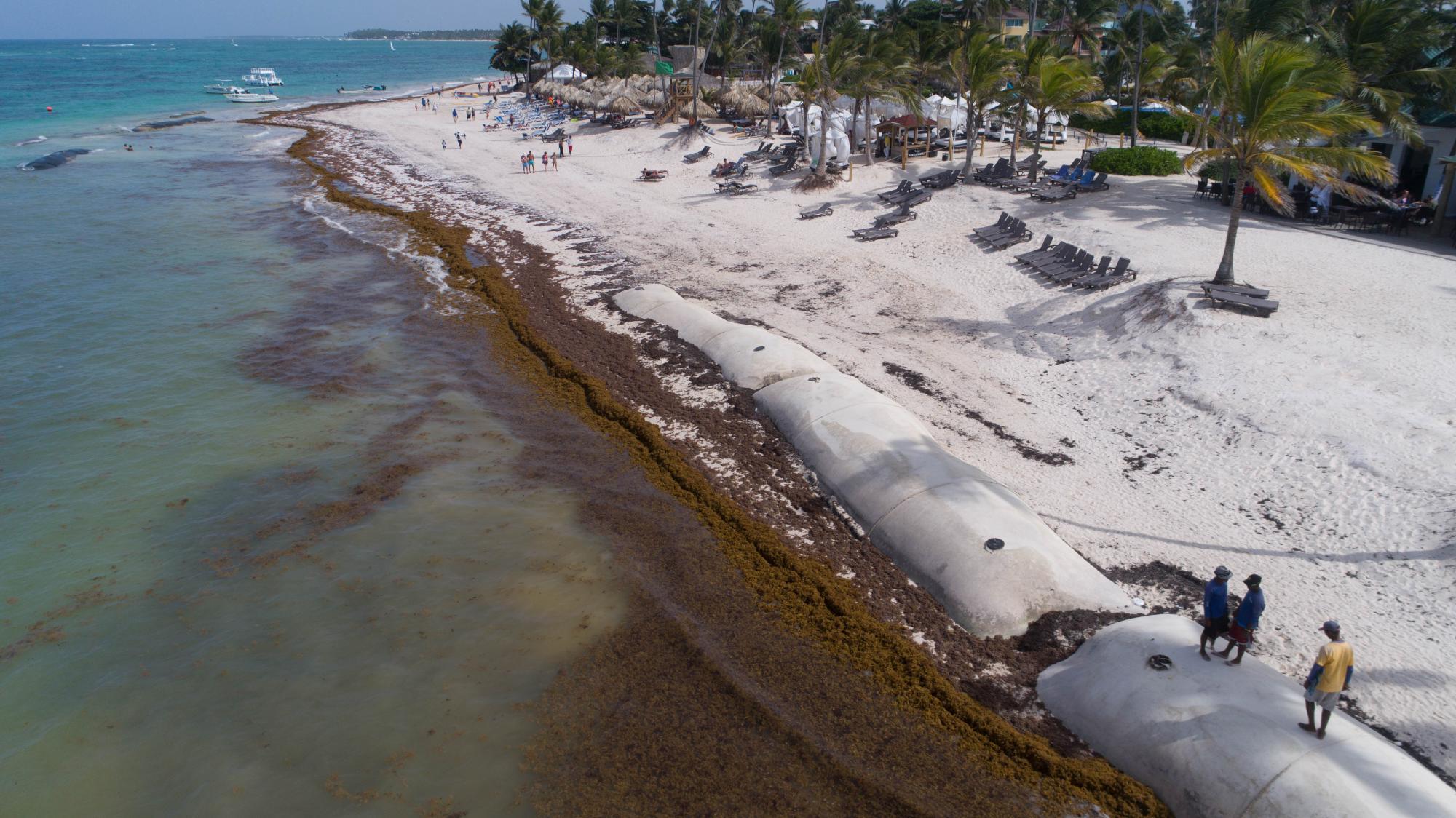
The warning now comes from inside Punta Cana. In May 2026 Jake Kheel of the Puntacana Foundation, backing concerns from Frank Rainieri about uncontrolled development, said that "There is no prosperous country built on a dead sea." His point was that coral reef loss threatens tourism more than any infrastructure gap.
Case study 2: Tulum, when the airport arrives before the infrastructure
Tulum's Felipe Carrillo Puerto International Airport opened in late 2023, and the Tren Maya rail line followed in 2024. Both were built to bring more visitors to a town that had grown quickly as a bohemian beach destination. The Sierra Club reports that construction of the train damaged mangrove forests and polluted cenotes, and that volunteer monitors have documented E. coli contamination in many popular cenotes. Local activists quoted in the report estimate that about 125 cenotes were damaged.
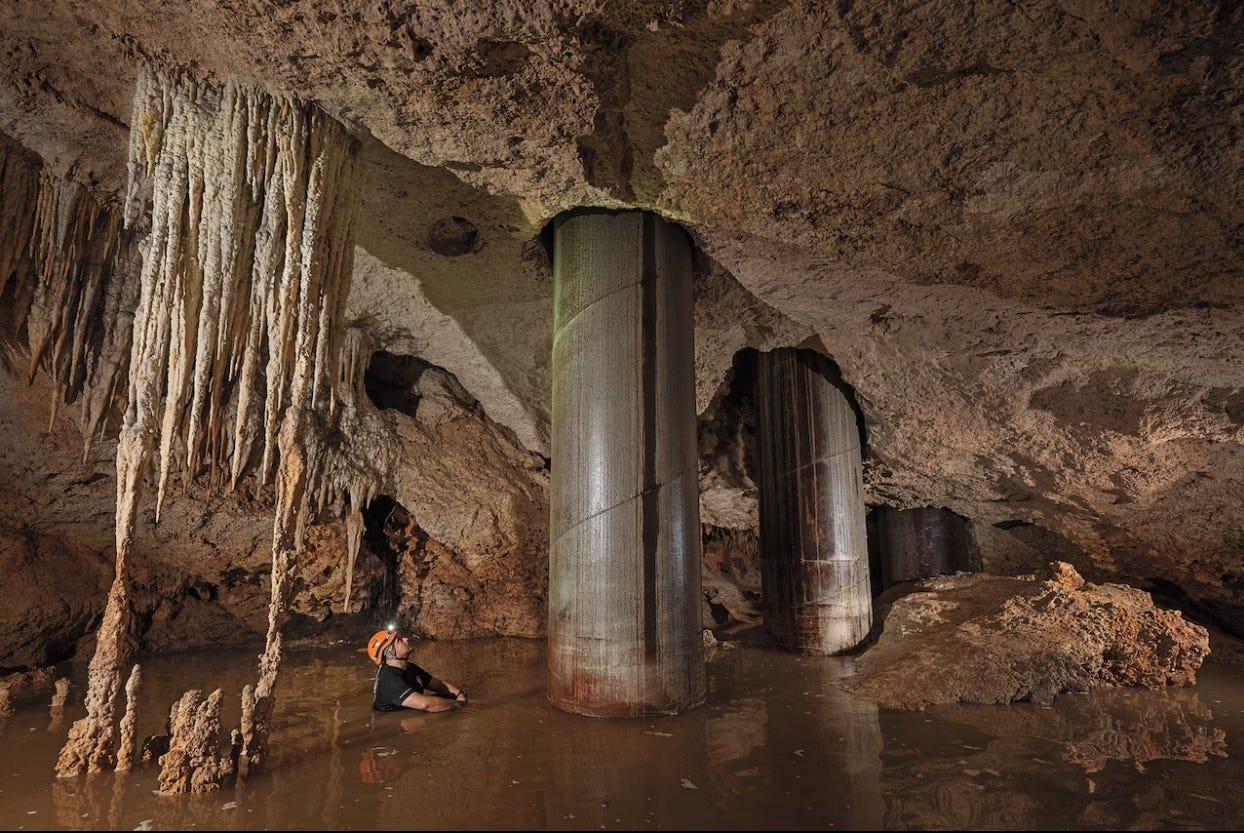
Separately, a UNAM coastal engineer told Riviera Maya News that erosion has reached critical levels along more than 80% of the Quintana Roo coastline, with beaches retreating about two meters a year.
Case study 3: Guanacaste, growth that kept compounding
Costa Rica's Guanacaste province saw its tourism boom begin in 2002 with the first international flight into Liberia airport. According to an HVS market report, passenger arrivals increased 397% in the period it studied, an average of 37.8% per year. The same analysis notes that infrastructure has not kept pace, with many roads still unpaved, and academic work from Costa Rica's UNED links the region's water scarcity to growth in tourism and urbanization.

The airport is still expanding: in 2026 it brought in 698,079 international visitors from January to July, 13.3% more than a year earlier. Guanacaste shows that once a destination has a strong airport, growth does not stop by itself.
Case study 4: Las Terrenas, a warning on our own peninsula
Samaná has its own recent example. In June 2025, the environmental prosecutor's office (Proedemaren) suspended The Reef, a real estate project by Noval Properties at Punta Bonita in Las Terrenas. Prosecutors reported that wetlands had been filled by about 1.7 meters, three species of mangrove had been cut and watercourses diverted.
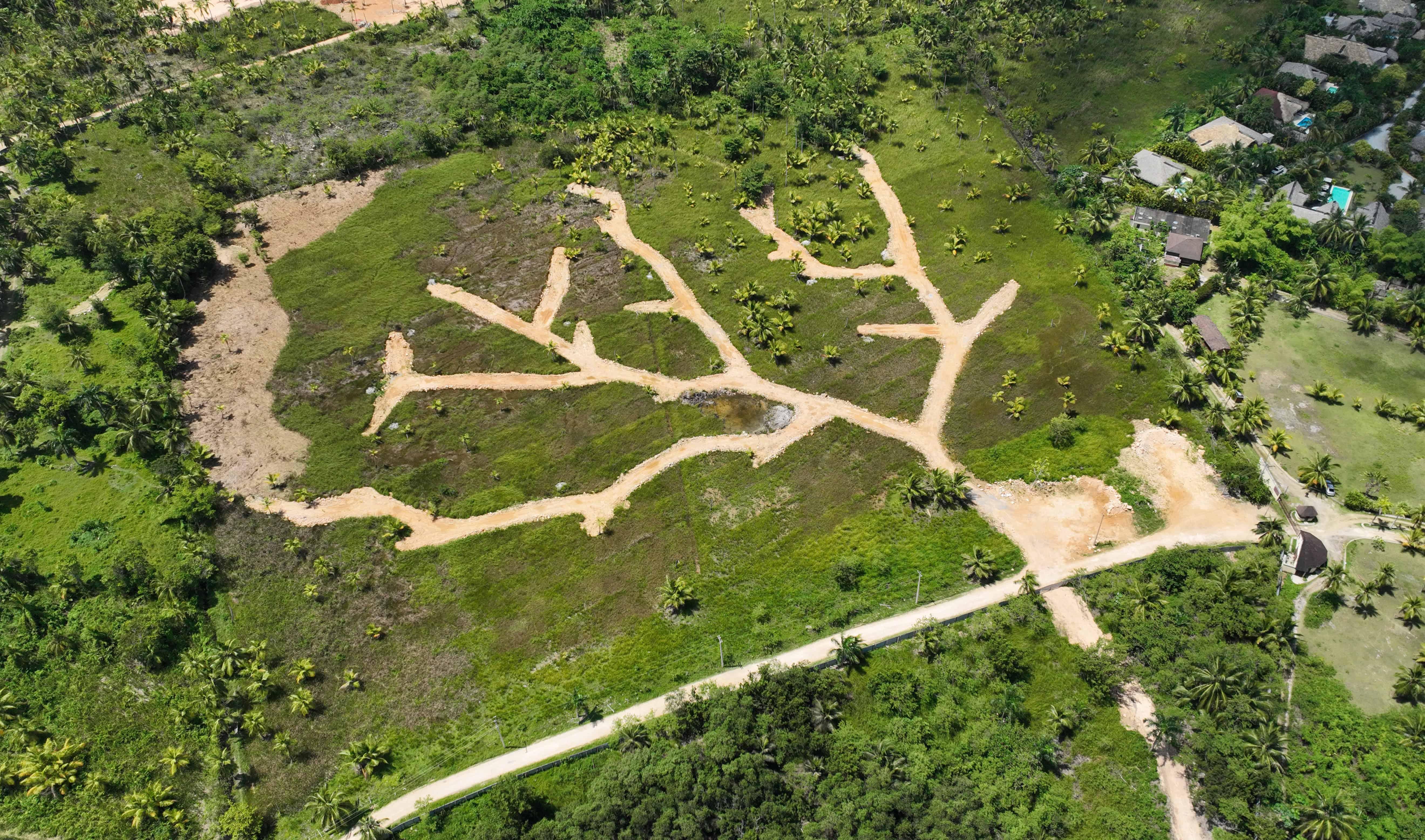
The press described a project of 510 apartments in 17 buildings. The developer rejected the accusations, said the wetlands in question were temporary rainwater pools and that its drainage work followed plans approved by the Ministry of Environment, and described the stoppage as a temporary suspension. Whichever account proves right, the case shows how quickly a coastal project on the peninsula can become a legal and reputational problem when wetlands are involved.
Case study 5: Galápagos and Bhutan, destinations that limit volume
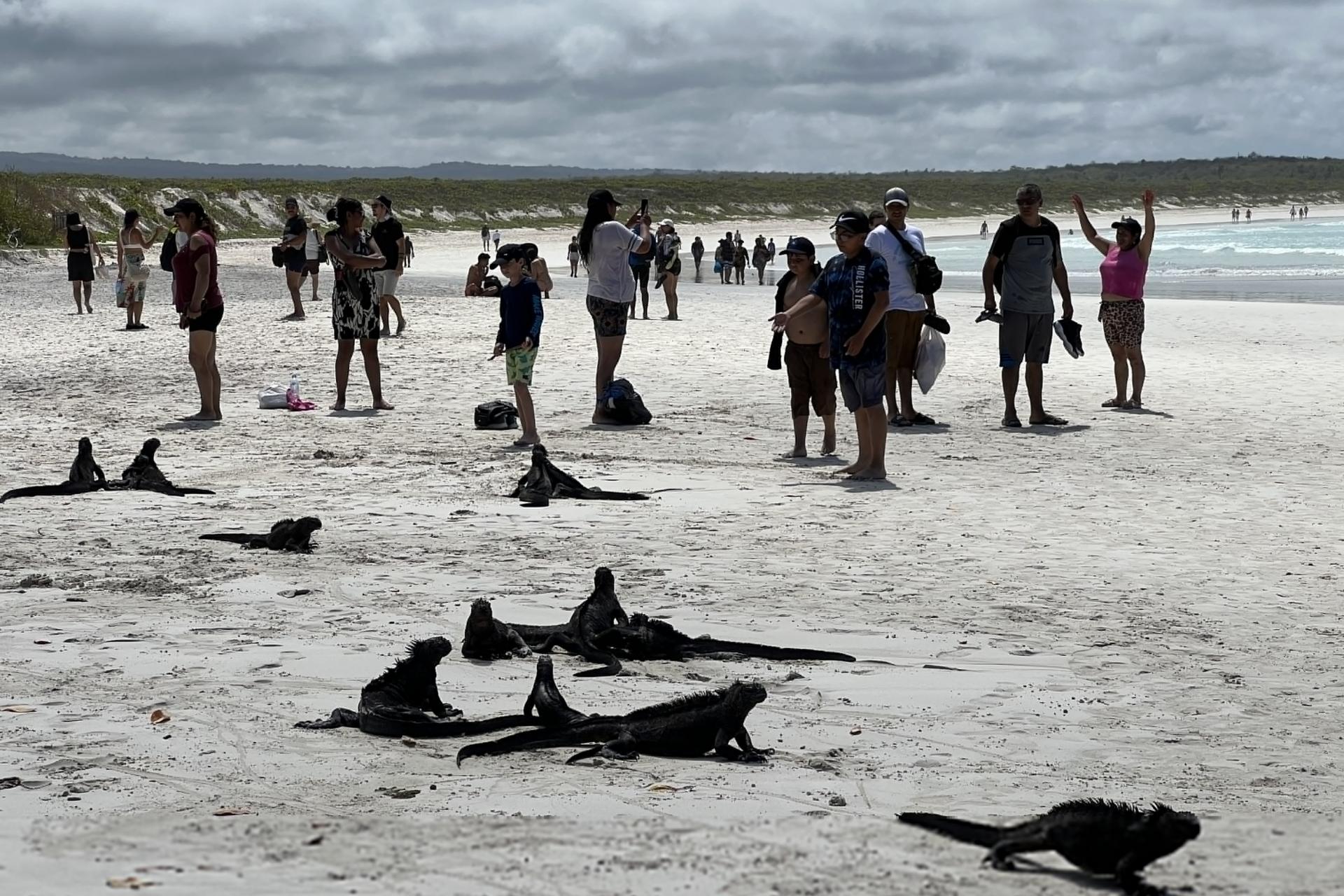
Some destinations decided in advance how many visitors they can absorb. Ecuador limits flights to the Galápagos (a cap set in 2012), has kept a moratorium on new tourism construction since 2016–2017 and doubled the islands' entry fee in 2024. Ecuador's tourism minister described the islands as "not only a national treasure but a global one." The system is imperfect: environmentalists in the 1980s recommended a cap of 12,000 visitors a year, and arrivals now exceed 170,000, with most growth in land-based tourism that was not capped. Tour operators have asked for tighter limits on hotels and land visitors, and the tourism ministry projects up to 1 million visitors a year by 2041 if growth is not regulated.
Bhutan takes a pricing approach under a "high value, low volume" policy. Its sustainable development fee, which was US$200 per person per night, was halved to US$100 in 2023 after operators said it was suppressing demand. Bhutan shows how hard it is to find the balance in either direction. One Iberia travel writer summarized the Galápagos problem as preventing tourism from "loving the place to death."
What these cases suggest for Samaná
Sewage, water and road capacity need to exist before the new rooms do. Tulum and Guanacaste show the cost of building the gateway first.
Coastal setbacks and wetland rules only protect a destination if they are enforced. Punta Cana's erosion and the Las Terrenas case both come down to enforcement.
Year-round residents and longer stays spread the load better than a few peak weeks of volume. They also give airlines the stable demand they need.
Fees, caps and density limits are easier to introduce while a destination is small than after it has become dependent on volume.
So when will Samaná get significantly more flights?
There probably will not be one magic date, but the data suggest the process has already started. Samaná remains a small airport today. Yet passenger growth in 2026, rapidly expanding Canadian traffic, the arrival of direct Paris service, investment in the airport experience and VINCI's concession through 2060 all point in the same direction. The next breakthrough will happen when another airline's spreadsheet shows what residents already feel: there are now enough people who want to fly directly to Samaná that not serving them leaves money on the table.
The fastest way to get there is not to complain about the lack of flights. It is to keep building the destination: more residents, more quality hotels, more businesses, more events, more repeat visitors and more year-round demand. We would add one condition. Build it in the way that keeps the whales, the mangroves and the beaches that make people want to fly here in the first place. Punta Cana, Tulum and Guanacaste each got their flights. Samaná has the advantage of arriving later and being able to learn from them.