
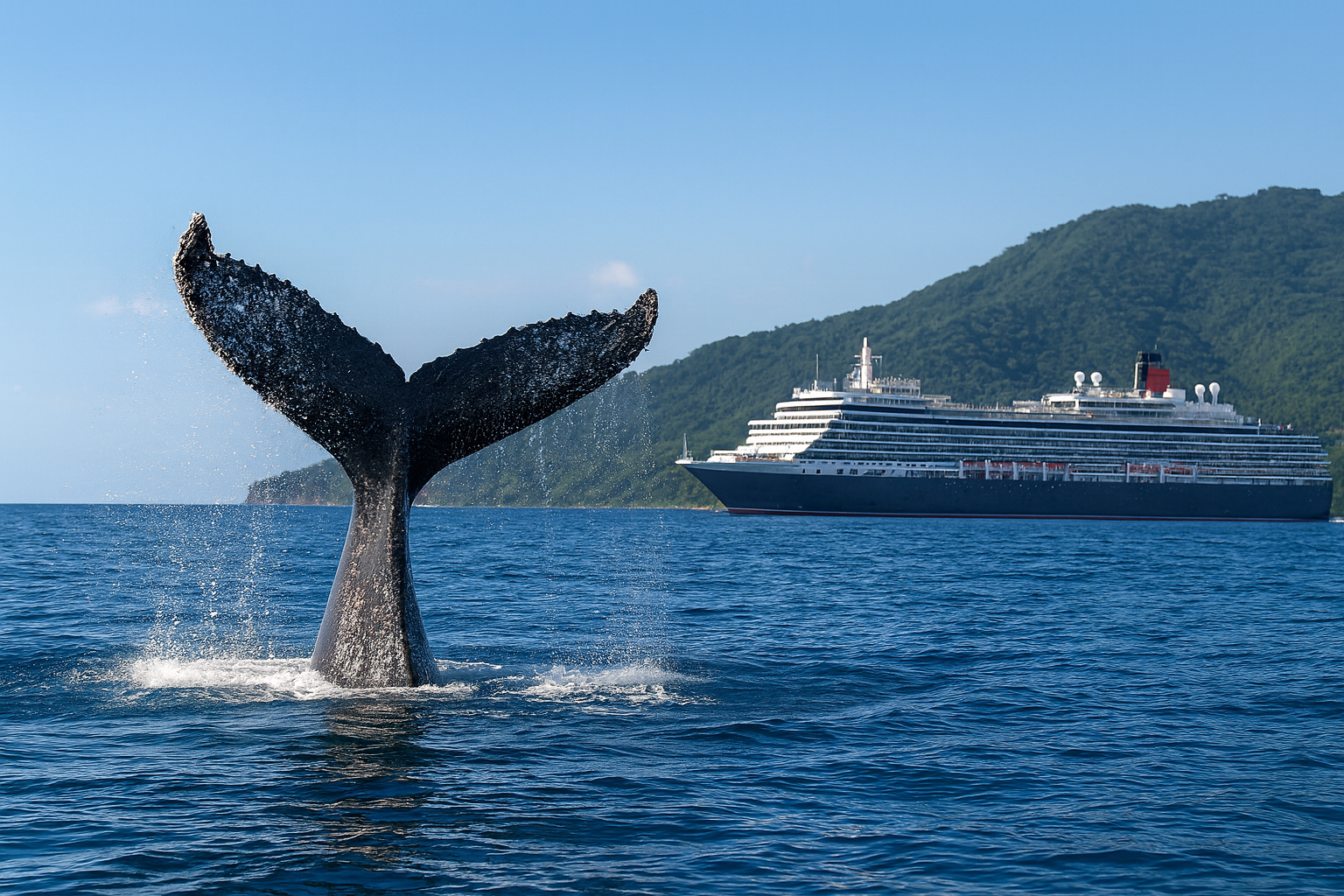
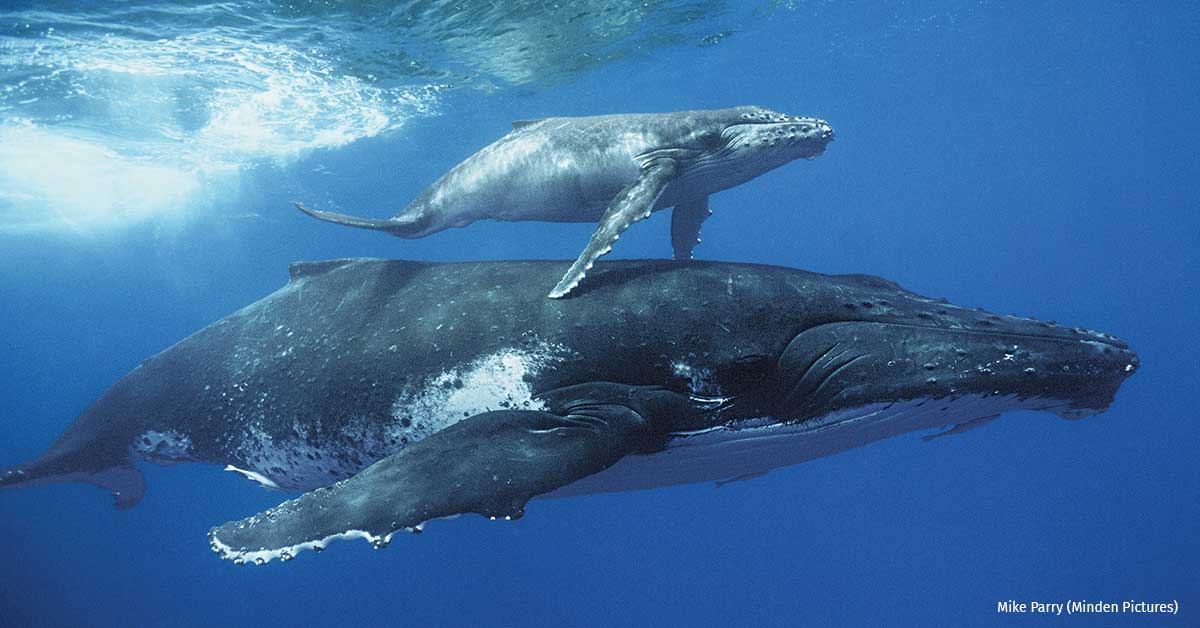
Every winter, whales travel thousands of kilometers to give birth and nurse their calves in these waters.
The original article cites research and monitoring by NOAA, the International Whaling Commission, and Dominican marine conservation institutions showing that Samaná regularly hosts exceptionally high concentrations of breeding humpbacks.
A Globally Significant Nursery
Field surveys by WWF and the Caribbean Cetacean Society in 2024–2025 recorded between 60 and 140 whales in the bay at the same time.
At peak levels, the reported density reached approximately one whale per three square kilometers.
The significance of the issue is therefore not simply whether humpback whales as a species are endangered.
The immediate concern is the condition of the habitat they rely on for reproduction.
The Early Warning Signs
Monitoring programs referenced in the article have documented several pressures:
increasing vessel disturbance during breeding season,
avoidance behavior among mother-and-calf pairs,
degradation of mangroves and seagrass,
declining water quality around river outflows,
coastal development entering sensitive areas,
fragmented enforcement of environmental rules.
The article compares these warning signs with patterns observed in places such as Maui, Baja California, the Salish Sea, and Península Valdés, where whale behavior changed as human pressure increased.
The central argument is simple: protecting a functioning nursery is significantly easier than trying to restore one after whales have shifted elsewhere.
There Is Still Time to Act
Samaná remains at a stage where prevention is possible.
Environmental protection is not separate from the region’s economy.
Whales, mangroves, coral reefs, beaches, and coastal landscapes are part of the natural infrastructure supporting tourism, fisheries, and the wider identity of Samaná.
Protecting the bay is therefore not only a conservation issue.
It is a question of what kind of economic and environmental future the region wants to build.
Sources included in the original article
WWF Dutch Caribbean — Dominican whale research
International Whaling Commission — Dominican Republic country profile
NOAA National Marine Sanctuaries
The Nature Conservancy — Caribbean Marine Biodiversity Program