
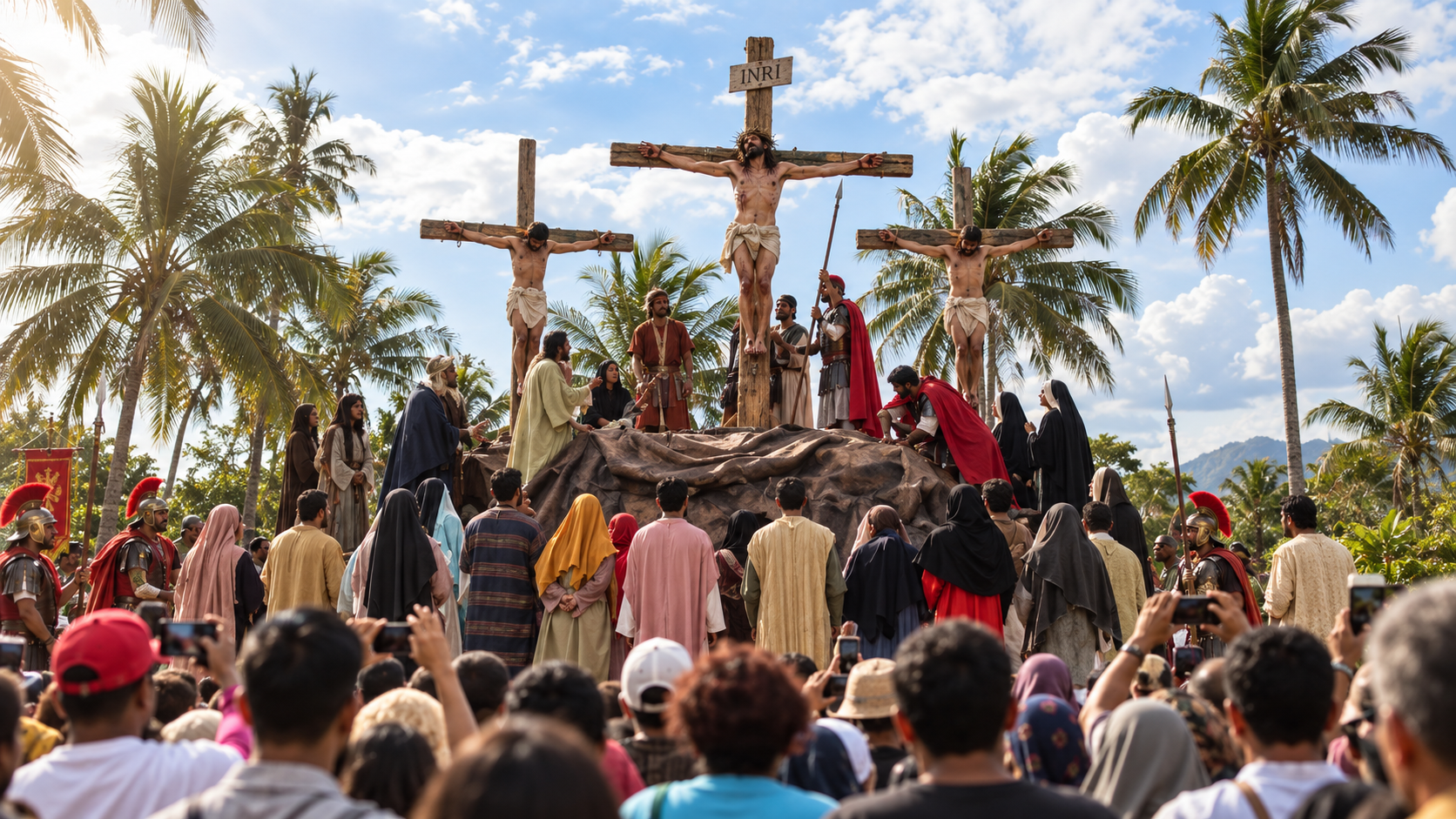
It combines solemn Catholic traditions with family gatherings, traditional food, travel, and time spent together. In Samaná, this contrast between devotion and holiday life is especially visible.
National Observances: Faith, Reflection, and Family Time
Semana Santa begins with Palm Sunday and continues through Easter Sunday.
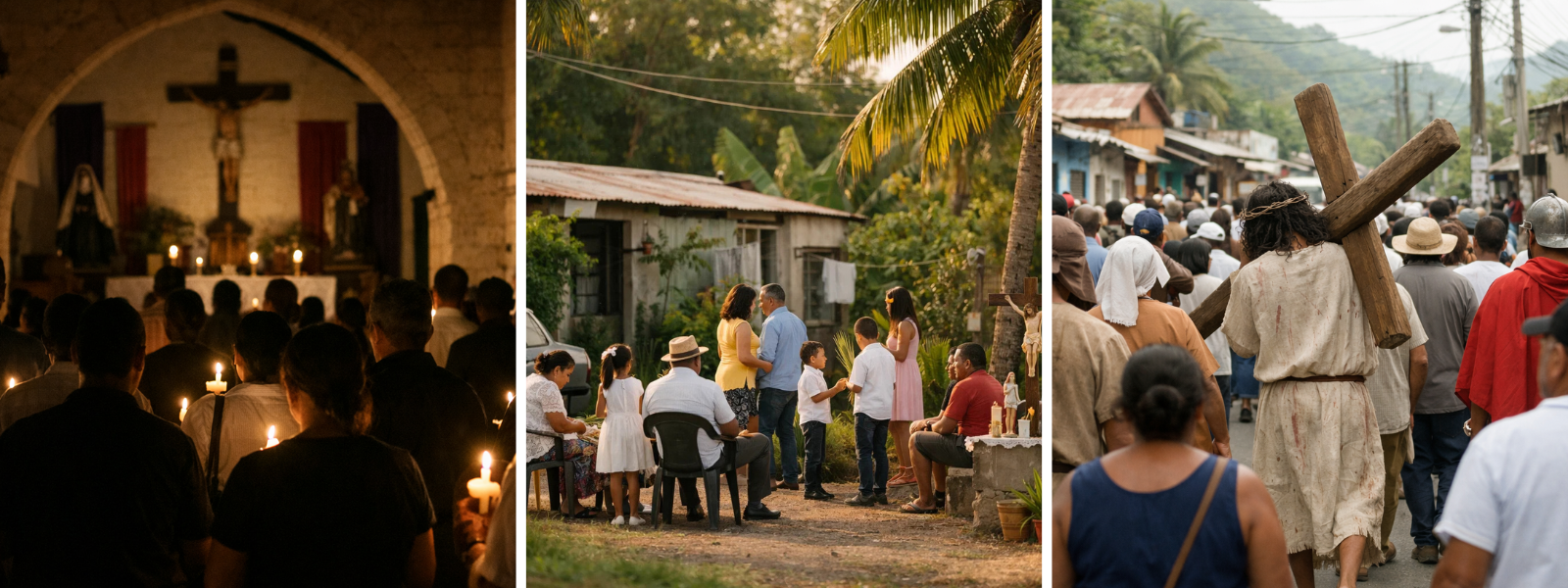
Churches across the Dominican Republic organize liturgies and processions throughout the week, including the Chrism Mass, the washing of feet on Holy Thursday, and Good Friday’s Via Crucis.
Good Friday remains the most solemn day.
Commercial activity slows or stops, while the original article notes that music and alcohol are prohibited for 24 hours. Many Dominicans fast or abstain from meat and dedicate the day to prayer and reflection.
At the same time, Semana Santa is a national holiday period.
Schools and many workplaces close from the middle of the week, allowing families to travel or spend time together. Destinations such as Samaná, Puerto Plata, and La Romana experience a significant increase in visitors.
Unlike in some other countries, Easter Monday is not traditionally celebrated in the Dominican Republic, and customs such as the Easter Bunny and egg hunts are not historically part of Dominican Easter. Globalization is gradually introducing some of these practices, particularly for children.
Culinary Traditions of Semana Santa
Food plays a central role during Holy Week, especially because many people avoid red meat.
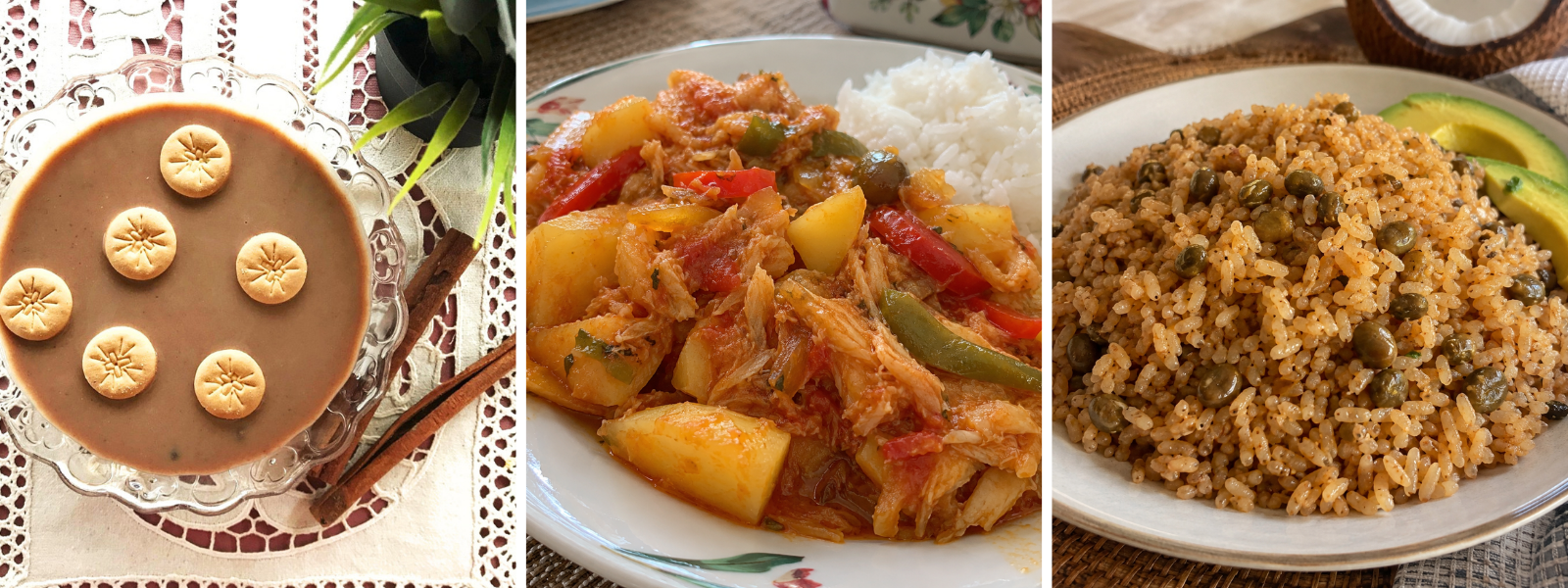
One of the most traditional dishes is bacalao con papas — salted cod with potatoes.
Another is habichuelas con dulce, a sweet dish made with red beans, coconut milk, sugar, cinnamon, star anise, cloves, and other aromatics.
It is typically decorated with small round cookies carrying a cross and prepared in large quantities to share with family and neighbors.
Other traditional foods include:
moro de guandules con coco,
eggplant stews,
buñuelos de yuca.
Semana Santa in Samaná: Tradition Meets Tourism
Samaná reflects both sides of Semana Santa.
Local communities remain strongly connected to religious traditions. Churches in Santa Bárbara de Samaná and Las Terrenas organize processions, vigils, and services with broad community participation.
On Good Friday, Santa Bárbara hosts a live Via Crucis in which parishioners reenact the Passion of Christ.
Palm crosses on doors, modest dress, and a quieter atmosphere remain visible signs of the holiday.
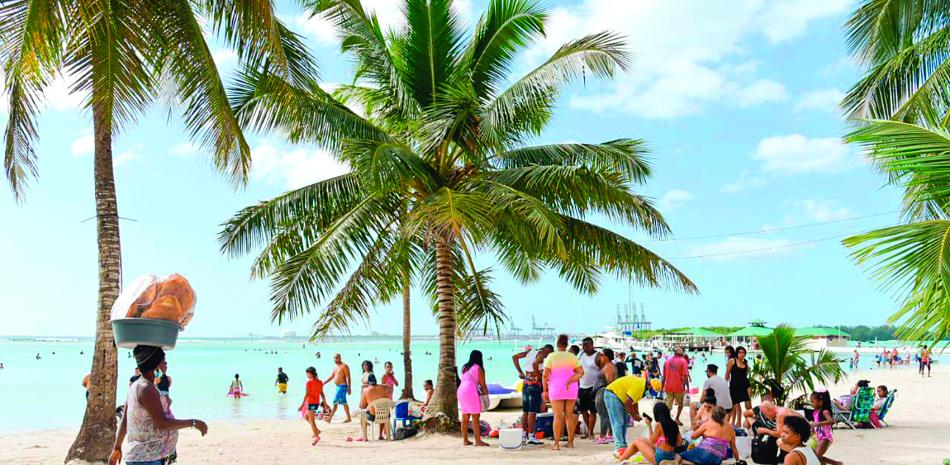
At the same time, the peninsula is one of the country’s most popular Semana Santa destinations.
Families travel to its beaches, waterfalls, and national parks. Although large beach parties have been restricted in recent years for safety reasons, smaller gatherings, boat trips, and beach picnics remain common.
Las Terrenas, Las Galeras, and Playa Rincón are particularly popular.
By Holy Saturday and Easter Sunday, music and social activity return.
A Strong Community Tradition
Local families often prepare well in advance, cleaning their homes, shopping early, and cooking traditional meals.
Children may carry bowls of habichuelas con dulce to neighbors, reinforcing the sense of community around the holiday.
Authorities and volunteer organizations also coordinate beach safety, crowd management, and clean-up initiatives after the holiday weekend.
For visitors who want to understand Dominican culture beyond resort life, Semana Santa in Samaná offers a particularly vivid combination of faith, family, tradition, and Caribbean life.