
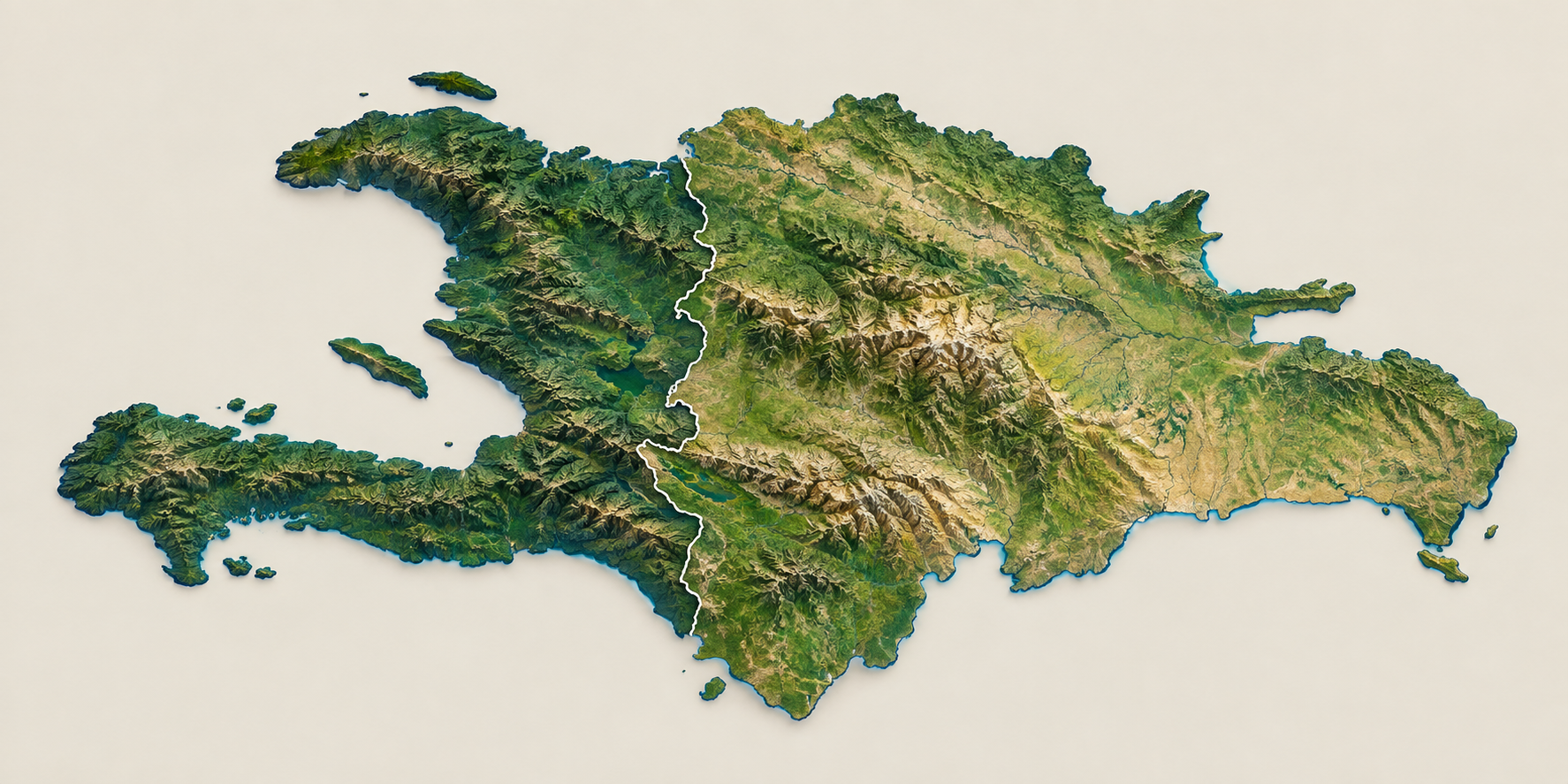
Hispaniola, a Caribbean island shared by Haiti and the Dominican Republic, presents one of the region’s most striking contrasts.
On one side is Haiti, a country that has endured repeated political crises, economic hardship, institutional instability, and devastating natural disasters. On the other is the Dominican Republic, which has experienced decades of stronger economic growth, expanding tourism, and increasing foreign investment.
A visible symbol of this divergence is the border barrier being constructed by the Dominican Republic along sections of the shared frontier. Work began in 2022 as part of an effort to address irregular migration and cross-border smuggling.
Understanding how two nations sharing the same island arrived at such different circumstances requires looking at their colonial history, international relationships, political development, environmental policies, and economic structures.
Colonial Beginnings and the Seeds of Division
Hispaniola’s political division dates back to European colonization.
The eastern part of the island remained under Spanish control and eventually became the Dominican Republic, while the western part came under French rule and became Haiti.
The colonial systems developed very differently. The French colony of Saint-Domingue became one of the world’s most profitable plantation economies, heavily dependent on enslaved African labor. By the end of the 18th century, hundreds of thousands of enslaved people had been brought to the colony to work primarily on sugar and coffee plantations.
The brutal conditions and extreme demographic imbalance eventually contributed to the Haitian Revolution, which began in 1791.
After more than a decade of conflict, Haiti declared independence in 1804, becoming the first independent Black republic and the product of the most successful large-scale slave revolt in modern history.
But political freedom came at an enormous human and economic cost.
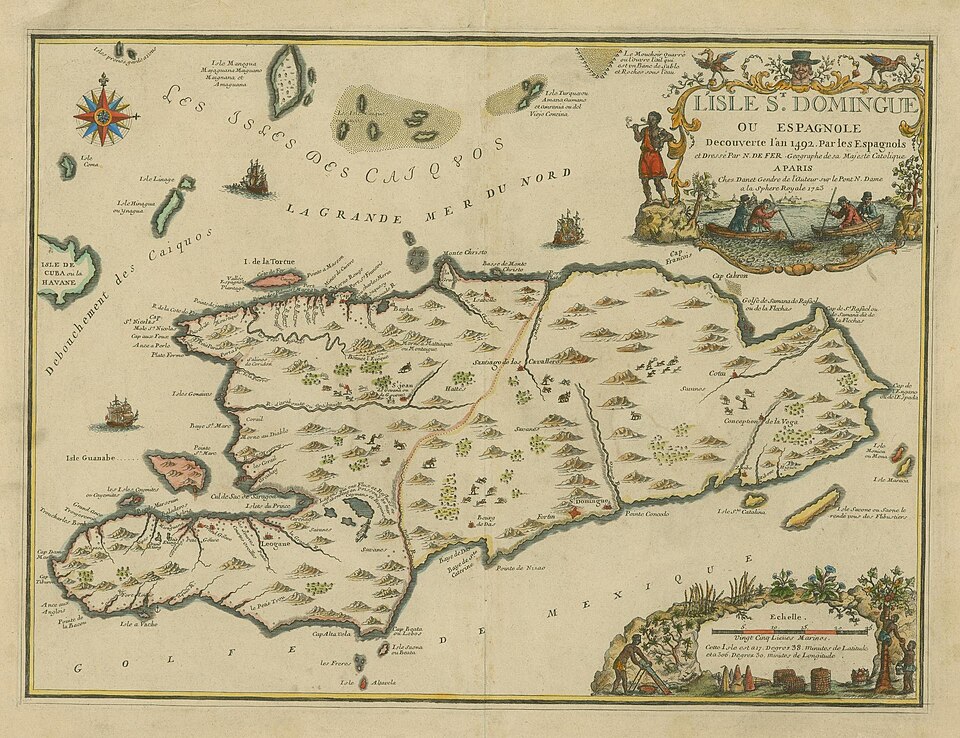
The Cost of Haitian Independence
For years after independence, Haiti remained diplomatically isolated.
France eventually recognized Haitian sovereignty in 1825, but only after demanding a vast indemnity to compensate former French colonists for lost property.
The financial burden became known as Haiti’s “independence debt.” Haiti was forced to finance part of the payment through loans from French institutions, creating a long-lasting debt burden that historians and economists have linked to the country’s limited ability to invest in public institutions and infrastructure.
The consequences extended well beyond the 19th century, contributing to a pattern of dependence on foreign creditors and external financial influence.
The Dominican Republic’s Different Path
The eastern side of Hispaniola followed a different political trajectory.
In 1821, Santo Domingo declared independence from Spain. The independent period was brief. In 1822, Haitian forces under President Jean-Pierre Boyer took control of the eastern part of the island, beginning more than two decades of unified rule.
Dominican independence was ultimately proclaimed on February 27, 1844.
The decades that followed remained turbulent, including renewed conflict with Haiti, internal political instability, re-annexation to Spain in 1861, and the Restoration War that restored Dominican sovereignty in 1865.
Both Haiti and the Dominican Republic later experienced significant foreign financial and political influence, including U.S. military occupations during the early 20th century.
Environmental Challenges and Their Impact
One of the most visible differences between the two countries can be seen directly from above.
Satellite imagery has long shown a striking contrast in vegetation along parts of the Haiti–Dominican Republic border. NASA imagery has documented significantly denser vegetation on the Dominican side of some border areas.
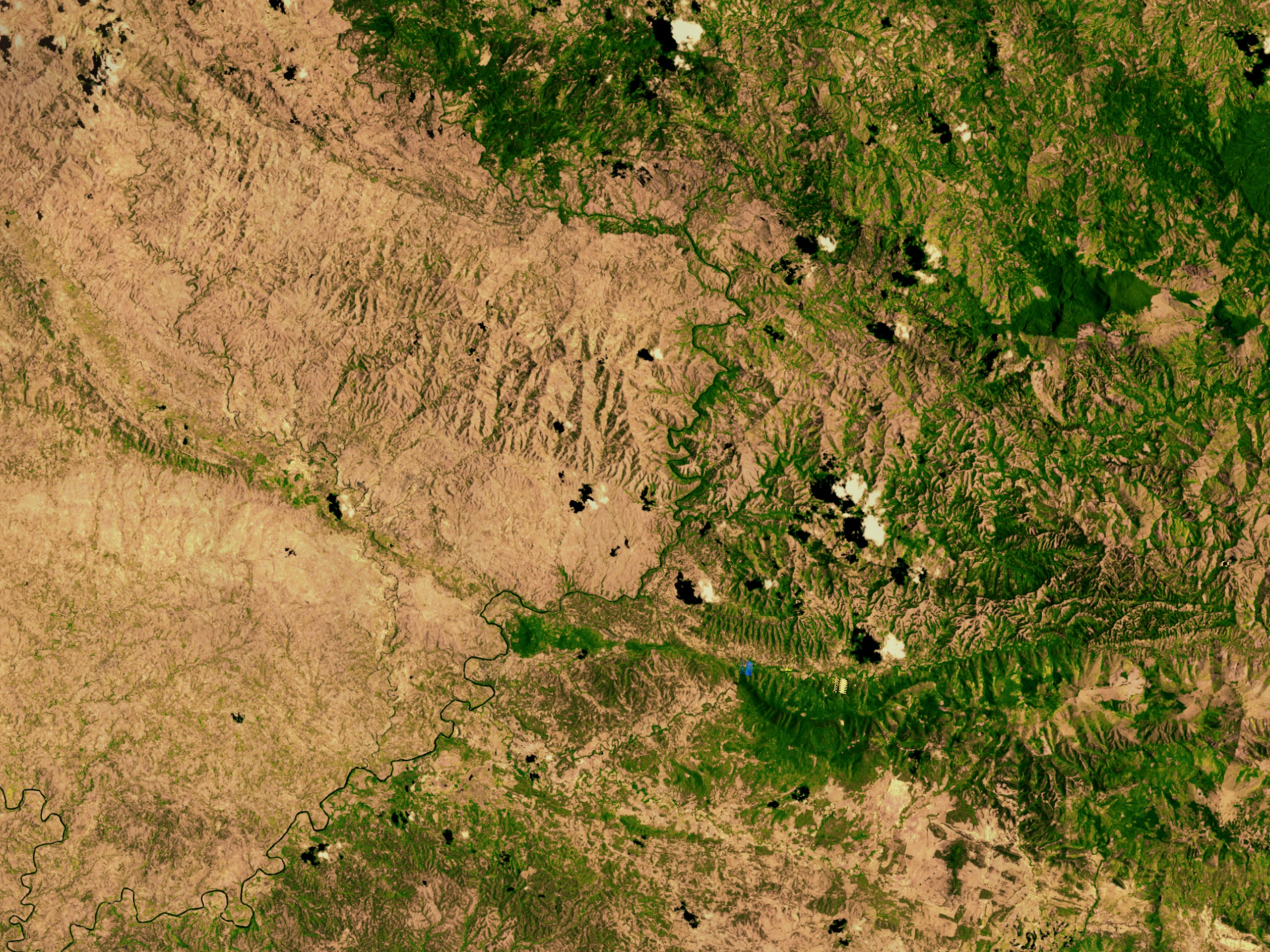
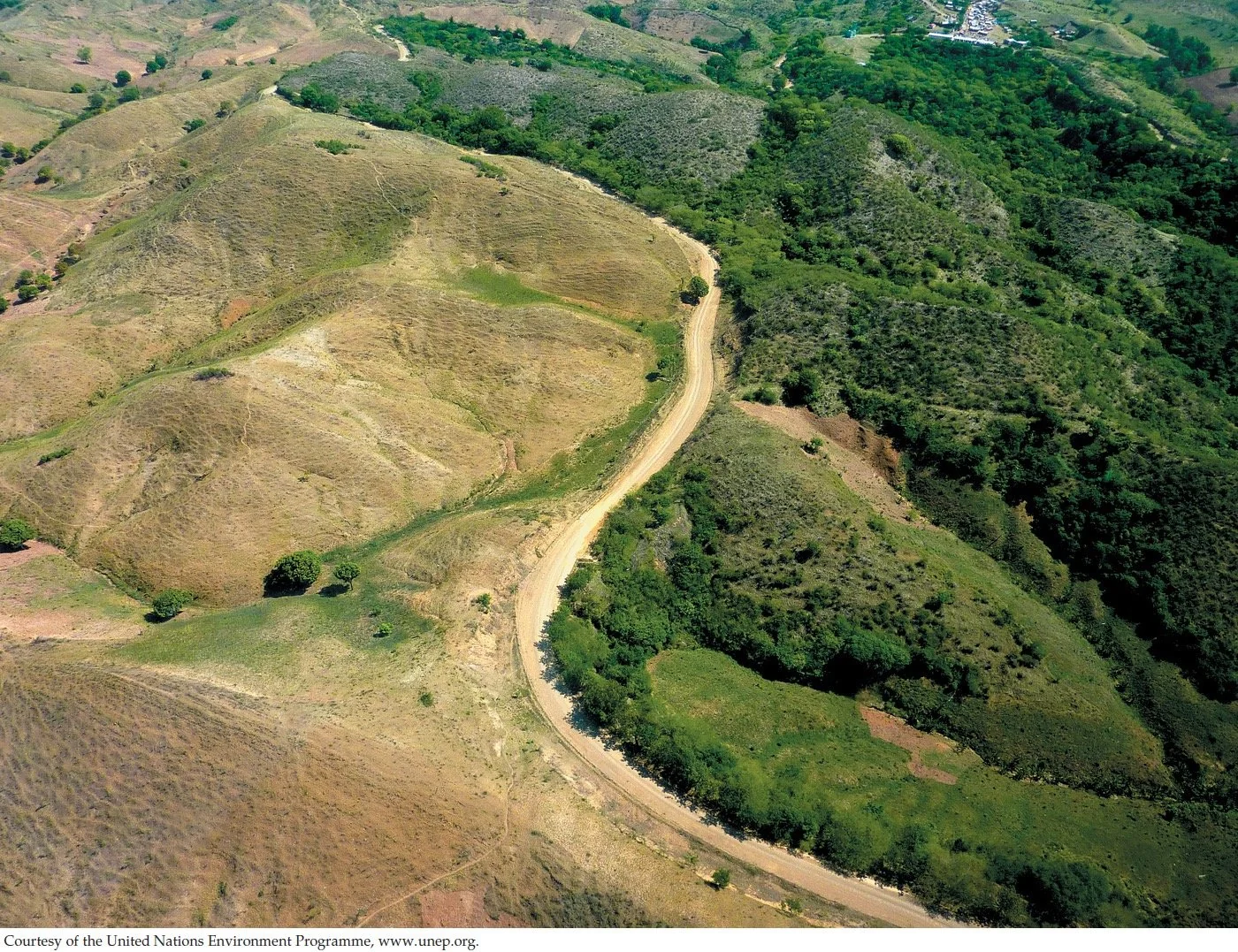
This difference developed through decades of contrasting land-use policies, economic pressures, and dependence on natural resources.
In Haiti, wood and charcoal became essential sources of household energy and income, increasing pressure on forests. Poverty, weak enforcement, agricultural expansion, and political instability further contributed to forest loss.
The Dominican Republic also experienced extensive deforestation historically, but later introduced stronger forest-protection and reforestation policies. Research shows that the country expanded forest cover during parts of the late 20th and early 21st centuries, although primary forest loss remains an issue on both sides of the island.
The environmental consequences matter economically as well. Deforestation increases soil erosion, reduces water retention, damages agricultural land, and can make communities more vulnerable to floods and landslides.
Economic Disparities and Development
Over time, the economic paths of the two countries increasingly diverged.
Haiti’s development has been constrained by repeated political instability, weak institutions, infrastructure shortages, limited access to capital, and the long-term consequences of historical debt.
The Dominican Republic, meanwhile, developed a more diversified economy supported by tourism, manufacturing, free-trade zones, construction, remittances, and foreign investment.
Tourism in particular became one of the country’s most important growth engines.
The Dominican Republic has established itself as the largest tourism destination in the Caribbean, attracting millions of visitors each year and supporting large-scale investment in hotels, infrastructure, aviation, and real estate.
These differences cannot be explained by geography alone. They are the cumulative result of different political institutions, economic policies, international relationships, investment environments, and historical circumstances.
Prospects for the Future
The futures of Haiti and the Dominican Republic remain closely connected.
Instability in Haiti creates humanitarian, economic, migration, and security consequences that inevitably affect its neighbor. At the same time, the Dominican Republic’s continued development depends partly on regional stability and effective management of the shared border.
For Haiti, long-term recovery will require stronger institutions, greater security, infrastructure investment, and sustained international support.
For the Dominican Republic, the challenge is to continue economic growth while addressing inequality, environmental pressure, migration, and the increasingly complex relationship with Haiti.
Two nations continue to share one island — but their histories demonstrate how political institutions, economic decisions, environmental policy, and international relationships can shape dramatically different outcomes over generations.